What does the VALORANT Champions Shanghai group stage decide before the playoffs?
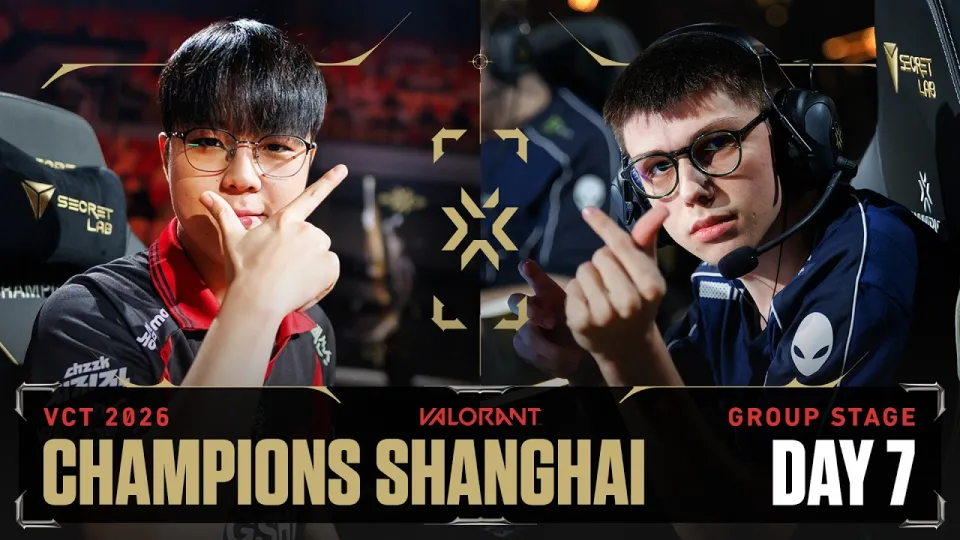
Video: VALORANT Champions Shanghai — Group Stage — Day 7
You can order the same kind of articles for your own video to boost it on YouTube and Google. Just message the Telegram bot @sat_sit_bot. The bot writes and publishes the articles itself (with your YouTube video embedded) on popular topical websites (no ads). Try it free: 50 articles on us.
· based on the channel VALORANT Champions Tour
The VALORANT Champions Shanghai group stage is the opening phase of the 2026 world championship, where sixteen teams from Americas, CN, EMEA and Pacific play to secure a place in the playoff bracket and avoid elimination. Day 7 of that stage, broadcast on October 1 by the VALORANT Champions Tour, narrowed the field further and produced the mix of upsets, technical delays and highlight plays that defined the week. For schedules, brackets and official announcements, the tournament's primary hub is the VALORANT Esports account on X.
What the Shanghai group stage actually is
Shanghai is the final stop of the 2026 VCT season and the event that crowns the VALORANT World Champion, running from September 24 to October 18. Sixteen qualified teams arrive from four regions — Americas, CN, EMEA and Pacific — and the group stage is where the season's narratives either hold or collapse. The tournament description frames it plainly: familiar names, new contenders and a fearless generation of challengers, all chasing the biggest trophy of the year. That framing matters because 2026 was a year of broken expectations, with two different Masters champions crowned before Shanghai, which means the group stage was never a formality for the favorites.
Group play exists to sort sixteen teams into a playoff picture. Every map in the opening phase carries weight: winning a group protects a team from the toughest side of the bracket, while a slow start forces a longer, more punishing path. Day 7 sits deep enough into the stage that the standings are no longer theoretical — teams know what a single series win or loss does to their position.
How Day 7 fits into the sixteen-team bracket
The seventh day of group play is where qualification math becomes visible to viewers, not just to coaches. With sixteen teams split across groups, the opening phase typically resolves in a handful of matchdays, and by Day 7 several teams are playing for seeding while others are fighting to stay alive. The broadcast on the VALORANT Champions Tour channel runs as a long multi-series block, which is why the stream is best treated as a VOD rather than a live appointment.
A practical way to watch a day like this:
- Check the day's match list and pick the series that affects your team's group directly.
- Watch the opening map first — early pistol and bonus rounds usually set the tone for the whole series.
- Use the VOD timeline to jump between series instead of watching the full block in order.
- Note the tech pauses: they shift timestamps, so community-made spoiler-free indexes often need editing after the fact.
The tech pauses that shaped the broadcast
Repeated technical pauses were the most consistent complaint about Day 7, and they were not a minor detail. Viewers described an endless series of pauses, and one of the most-liked comments in the thread was a spoiler-blocker timestamp list that its author warned might need editing because of a tech pause. That is a real production issue, not just chat noise: when a broadcast stops mid-round, the VOD timeline no longer matches the live schedule, and anyone relying on community timestamps to skip results has to recalibrate.
For viewers catching up later, the practical lesson is to treat any timestamp list as approximate. Pauses also change the rhythm for players. A long stop between maps can cool a hot hand or give a struggling team time to reset its utility plans, which is why analysts often separate a team's map-one form from its map-three form in long broadcast days.
Why CN results dominated the conversation
The performance of the Chinese teams was the second major theme of the day, and the reaction was blunt. One of the most-liked comments argued that China deserved to lose, pointing to lost eco rounds, blown 5v2 situations and utility usage that looked uncreative once set strategies broke down. Another highly liked reply went further, claiming there are stronger teams in other regions that never made it to Champions at all. A shorter, sarcastic strand simply declared that VCT China struggles.
Those reactions should be read as fan frustration rather than analysis, but they point at a real pattern worth watching: when a team's defaults stop working, does it have a Plan B? Losing anti-eco rounds and 5v2 retakes is usually a discipline problem, not a talent problem — over-aggression, poor spacing, or utility spent too early. On the other side, there were patriotic replies celebrating China as number one, which shows how split the audience is on the region's level.
Individual moments viewers actually remembered
Beyond the scorelines, Day 7 produced small moments that traveled further than the results. One viewer flagged a split-second misread where a Yoru clone looked like it was helping hold a site, a reminder of how convincing VALORANT's utility deception can be even for experienced watchers. Another comment threw support behind a well-known professional player with a mock presidential endorsement, the kind of running joke that builds around veteran names at every international event.
These moments matter for the tournament's reach. A world championship is judged not only by who lifts the trophy but by whether the broadcast creates clips that travel outside the dedicated esports audience. A confusing clone, a clutch retake or a perfectly timed ultimate does more for a group stage than a clean 2-0 that nobody remembers.
Common viewer questions about the group stage
Most confusion around a day like this comes from three places: format, schedule and spoilers. The format question is the simplest — sixteen teams, four regions, one bracket, and a group phase designed to eliminate teams before the playoffs begin. The schedule question is harder because broadcast days are long and pauses stretch them further, so checking the official channels is more reliable than trusting a timestamp list.
The spoiler question is the most practical. If you want to watch Day 7 without knowing results, avoid comment sections entirely, since the top-liked comments are usually timestamp indexes that reveal which series went the distance. The same applies to social feeds: official accounts post results quickly, so a curated VOD playlist is the safer route.
Useful links
- Official VALORANT Esports news and announcements: https://www.valorantesports.com/news
- Tournament site: https://www.valorantesports.com
- Live and VOD streams on Twitch: https://www.twitch.tv/valorant
- Updates on X: https://x.com/valorantesports
- Event photos: https://www.flickr.com/photos/valorantesports/
What Day 7 leaves for the rest of Champions
Day 7 confirmed that Shanghai's group stage is doing its job: separating teams that adapt from teams that only execute prepared plays. The tech pauses are a production problem the broadcast team needs to solve before the playoff weekends, because long stoppages hurt momentum for players and viewers alike. The CN debate will not be settled by one day of group play, but the specific mistakes fans pointed at — lost eco rounds, failed 5v2 holds, rigid utility — are the exact details that decide close series at a world championship. For the full picture, follow the VALORANT Champions Tour channel and keep the official VALORANT Esports account open for brackets, schedules and results as the bracket narrows toward the final in Shanghai.
Key takeaways
- Shanghai hosts the 2026 VALORANT world championship from September 24 to October 18.
- Sixteen teams from Americas, CN, EMEA and Pacific compete for the title of 2026 VALORANT World Champion.
- Group Stage Day 7 is the seventh broadcast day of the opening phase, streamed by the VALORANT Champions Tour channel.
- Partners listed for the 2026 season include AWS, Coinbase, Mastercard, Red Bull, HyperX, OnePlus, Secretlab and Verizon.
- Day 7 discussion centered on repeated tech pauses, CN upsets and highlight moments such as a Yoru clone misread.
Questions & answers
How many teams play in the VALORANT Champions Shanghai group stage?
Sixteen teams qualify for the event, drawn from four regions: Americas, CN, EMEA and Pacific. They compete through the group stage for places in the playoff bracket, with the tournament running from September 24 to October 18 and crowning the 2026 VALORANT World Champion.
Why were there so many technical pauses on Day 7?
The broadcast repeatedly stopped for technical issues, and viewers noted that the pauses piled up across the day. The tournament organizers have not published a detailed explanation in the stream description, but the practical effect is that VOD timestamps created by the community often need adjusting after a pause.
Are the Chinese teams really the weakest region at Champions?
That claim comes from frustrated viewers reacting to lost eco rounds and blown 5v2 situations, not from an official ranking. CN teams have strong structural play but have looked predictable when their set strategies break down, which is a discipline issue rather than proof that the region cannot compete.
Where can I watch the full Day 7 VOD without spoilers?
The full broadcast is available on the VALORANT Champions Tour YouTube channel, and live or archived streams are on Twitch at https://www.twitch.tv/valorant. To stay spoiler-free, avoid comment sections, since the most-liked comments are usually timestamp lists that reveal which series went the distance.
Source: VALORANT Champions Shanghai — Group Stage — Day 7 · Markdown version